Cantigi and its Charm
Diversity of Cantigi Morphology
Flavonoid and Tannin Content
Research Opportunity

Cantigi and its Charm

At elevations above 3,000 meters above sea level (MASL), only a handful of plants are able to survive. One of them is cantigi (Vaccinium varingiaefolium), a plant native to Indonesia’s high mountains that has long been known mainly as a natural marker guiding climbers toward mountain summits.

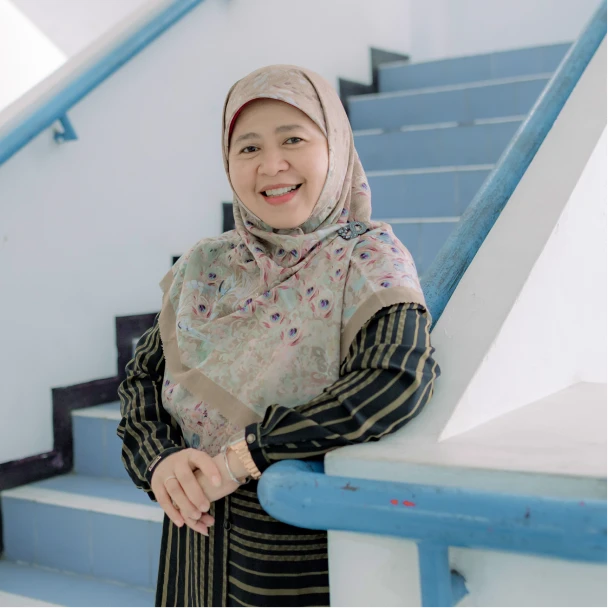
For Dr. Efri Roziaty, S.Si., M.Si., a lecturer in Biology Education at Universitas Muhammadiyah Surakarta (UMS), cantigi holds significant potential that has not been widely explored. Alongside Dr. Santhyami, S.Si., M.Si., and her students, Dawud Fa'i Salsabilla, Muhammad Yahya Nur Sholihin, Salsa Anida Rahmania, Muhammad Asyam Fathin, Ima Aryani, and Putri Agustina, Efri conducted research on the morphology, ecological distribution, and active compound content of cantigi on Mount Lawu.

Efri’s interest in highland plant research did not emerge suddenly. Long before conducting research on cantigi, she had supervised students studying the diversity of edelweiss species (Anaphalis javanica) on Mount Lawu.

From that research, Efri uncovered an intriguing fact beyond edelweiss itself. There are other types of vegetation with relatively abundant populations at extreme altitudes, one of which is cantigi.

“It looks like pucuk merah, but it’s not pucuk merah,” Efri recalled, quoting his student’s remark at Biology Laboratory 1 UMS, Saturday (31/1/2025). That curiosity later developed into a structured research project.

Given the extreme terrain of Mount Lawu, the study relied heavily on students with prior hiking experience, as well as strong physical and mental readiness to work in open nature for approximately one week.

The cantigi research was conducted around 2022 and was designed to be completed in less than one year. “In this study, our team used an exploratory method with a purposive sampling approach, meaning samples were taken based on the research objectives. However, I did not hike all the way to the summit because my physical condition was not strong enough,” Efri added.

In practice, Efri’s student team climbed to near the summit of Mount Lawu, reaching an altitude of around 3,000 MASL to locate and document the presence of cantigi.

“This approach was chosen because the plant’s distribution had not been clearly identified, both in terms of its maximum altitude range and population density. And the biggest challenge was clearly the extreme temperatures,” she explained.
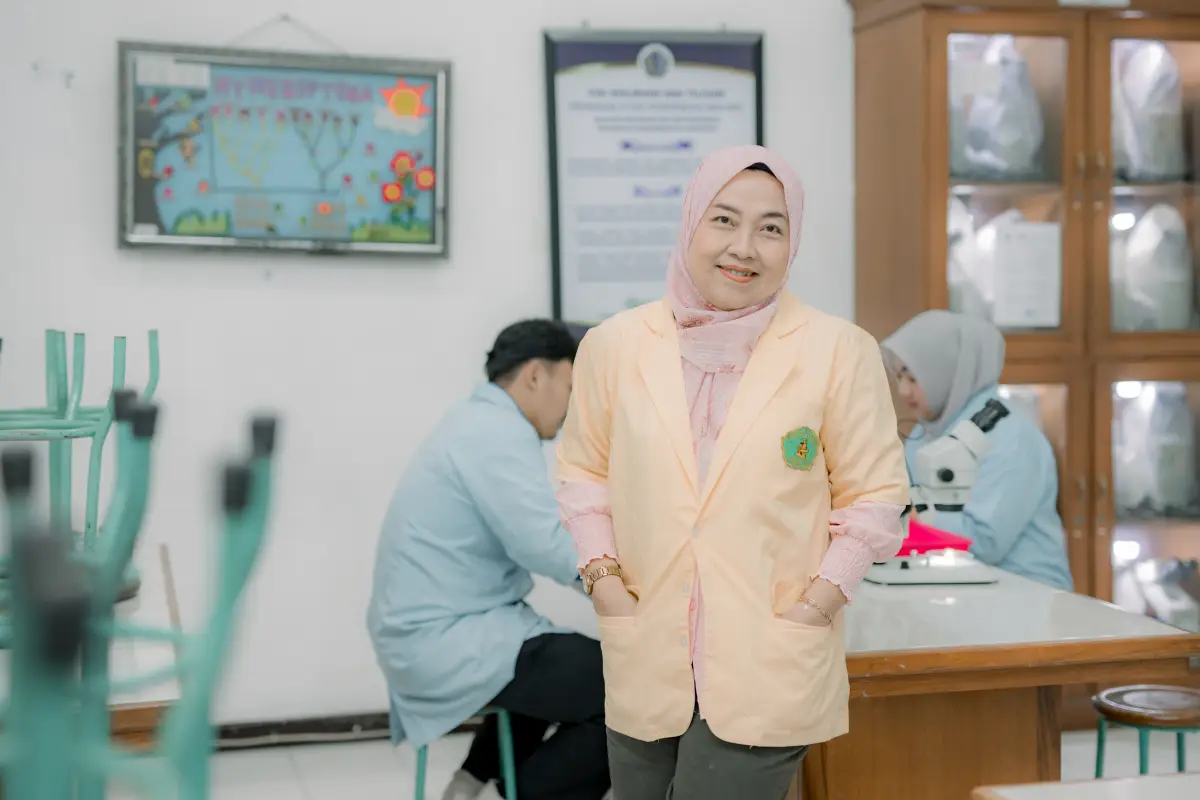
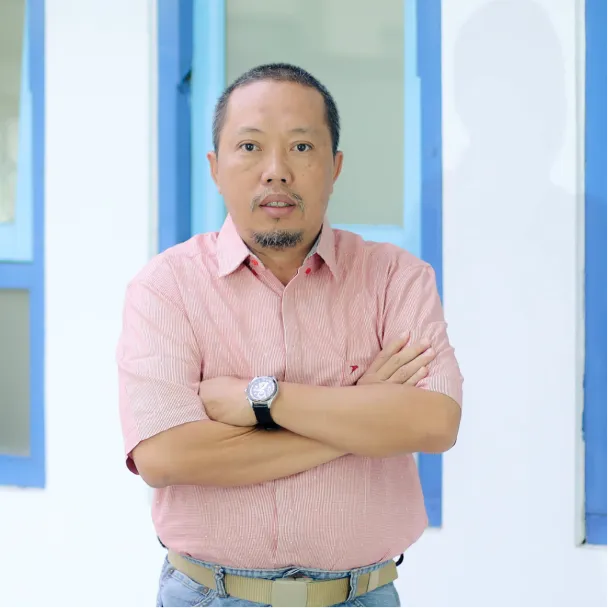
Dr. Efri Roziaty, S.Si., M.Si. UMS Public Relations/Imam Safii

During the day, Efri continued, temperatures at that altitude range between 15–20 degrees Celsius, while at night they can drop to 2 and up to -7 degrees during the rainy season. In addition, the rugged terrain and limited logistics required every sampling activity to be carried out efficiently.

Diversity of Cantigi Morphology

Efri’s study, titled “Morphology and Phytochemical Potential of Vaccinium varingiifolium in Mount Lawu, Karanganyar District, Central Java, Indonesia,” mapped the morphological characteristics of leaves, stems, and overall plant form as an initial stage of the research. One of the most interesting findings was the high amount of morphological diversity found in cantigi.

Unlike edelweiss, which tends to be relatively uniform, cantigi exhibits striking variations in form. “Some cantigi plants only grow one to two meters tall, while others resemble small trees or are large enough to be used as shelter,” Efri explained.

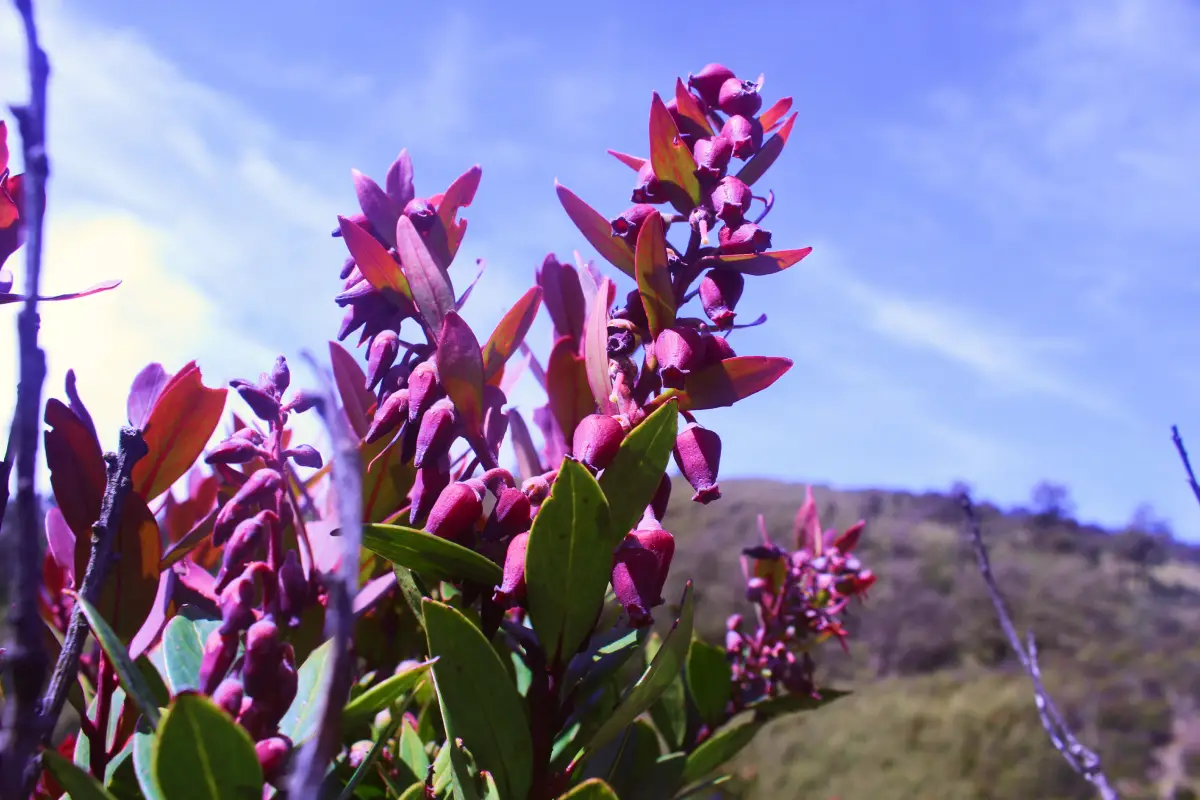
Leaves, flowers, and fruits of the cantigi plant encountered by the UMS research team during an expedition on Mount Lawu. Private doc

Morphological analysis is important to understand how cantigi adapts to extreme environments, as well as to serve as a foundation for further studies in ecology and natural product chemistry. Interestingly, cantigi was found only at altitudes of 2.000-3.000 MASL.

“Below the altitude limit we identified earlier, for example in lower areas like Bukit Mongkrang, cantigi is almost never found. Cantigi has a very specific ecological niche, especially related to temperature and elevation,” she elaborated.

Flavonoid and Tannin Content

The next main focus of Efri’s research is the phytochemical content analysis of cantigi leaves, particularly the presence of flavonoids and tannins. These two compounds are well known as secondary metabolites commonly found in plants, especially those growing under high ecological pressure.

“In almost all highland plants, flavonoids tend to be dominant. However, our study is still at the profiling stage and has not yet reached quantitative measurement of compound levels,” Efri explained.

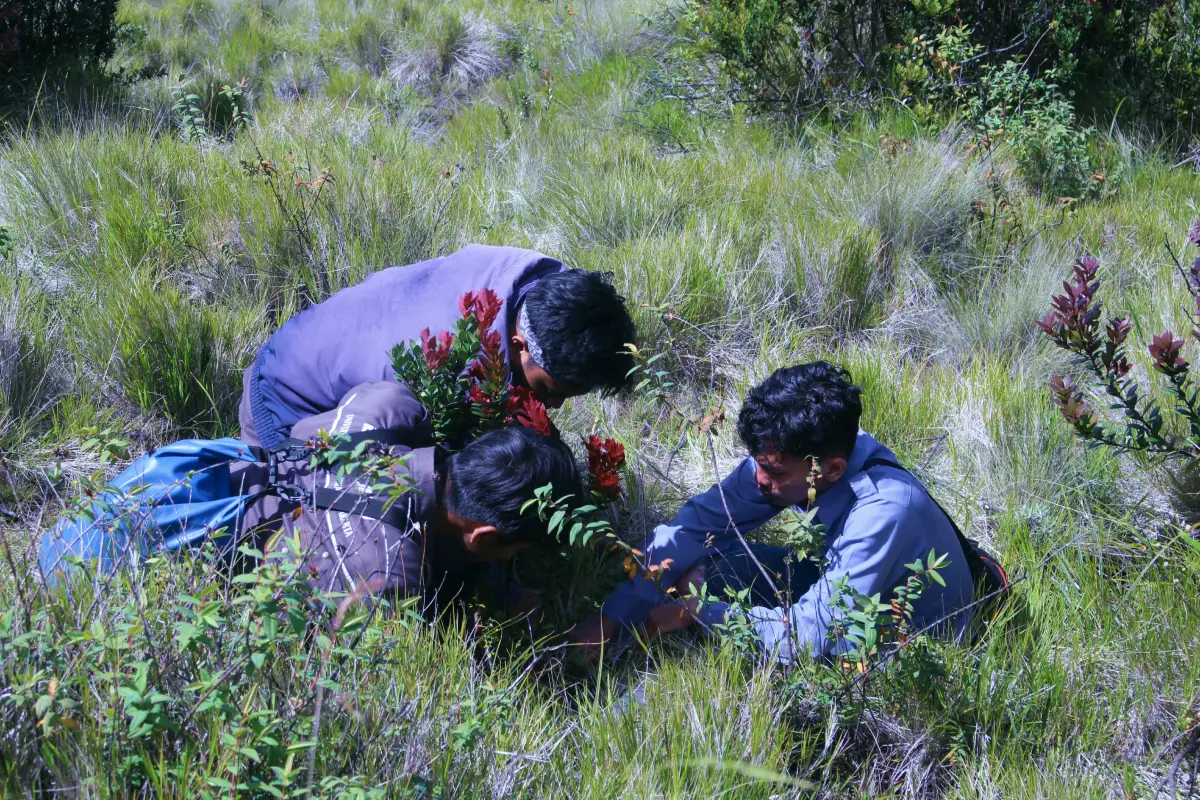
The UMS research team observing cantigi plants in the savanna of Mount Lawu. Private doc

Even so, the findings by Efri and her team open significant opportunities. Flavonoids, she noted, have potential benefits as antioxidants, anti-inflammatory agents, and even anticancer candidates.

“To reach that stage, further studies are certainly needed, such as compound isolation, bioactivity testing, and pharmacological screening,” she added.

In her research roadmap, Efri aims to position cantigi as an alternative natural resource for drug development, particularly anticancer agents. However, this line of research is classified as high cost and high risk, both in terms of funding, human resources, and access to research locations.

There are also significant challenges related to conservation. Mount Lawu is a protected area, meaning plant sampling cannot be conducted indiscriminately. Although cantigi has not yet been placed under strict protection like edelweiss, its utilization must still adhere to principles of sustainability.

“If it is to be developed, it must be done very carefully. Research should never end up damaging the ecosystem,” Dr. Efri emphasized.

Research Opportunity


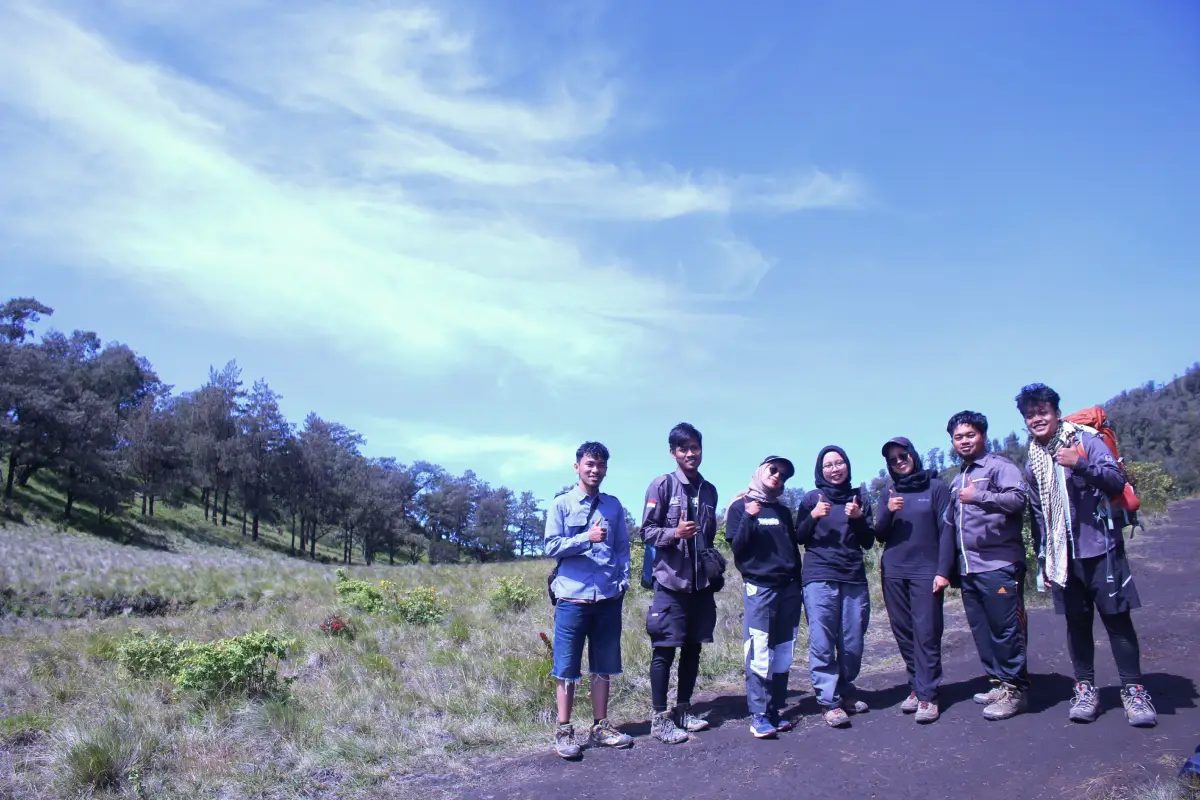
Efri's research team and an edelweiss researcher (far left) were in the Mount Lawu savanna to determine the maximum elevation limit at which the population density of cantigi plants occurs. Private doc

For Efri, research on cantigi is only the beginning. She is fully aware that the work conducted with her team so far has only touched a small fraction of the plant’s potential.

Until now, the research focus has been limited to the leaves, while other parts such as the fruit, stem, and roots remain largely unexplored. In fact, cantigi is believed to hold many untapped possibilities.

Efri shared that cantigi fruit is small and berry-like, turning dark red to almost black when ripe. Some of the students who joined the expedition even tasted it.

“According to the students, it has a sweet-and-sour flavor,” she said. This part of the plant has also sparked the research team’s curiosity, as it may contain chemical compounds different from those found in the leaves.

Unfortunately, this aspiration does not always align with realities. Limited research time, unpredictable weather conditions, and the challenging terrain of Mount Lawu mean that research teams are not always fortunate enough to encounter the plant during its flowering or fruiting phases.

Such are the challenges of biodiversity research in the wild. Research outcomes are highly dependent on seasons, weather patterns, and the constantly shifting dynamics of natural ecosystems.

Even so, Efri viewed cantigi research as an important entry point. She hoped the study can serve as an example that Indonesia, with its immense biodiversity, still holds many scientific treasures waiting to be explored.


Writer: Genis Dwi Gustati

Translator: Farizal Luqman Majid

Editor: Al Habiib Josy Asheva

Designer: Salsabila Kamila Wardah

Read original research
Get to know researcher

Academia Star

image-featured
29 January 2026

Research and policy formulation have become the endeavors of Prof. Dr. Anton Agus Setyawan, S.E., M.Si. in unraveling the complexities of Indonesia’s national economic challenges.

sdgs-label
sdgs-badge
sdgs-badge
image-featured
3 January 2026

Dizzo Violeta frequently moves between interface design competitions and application programming. His works have reached both national and international arenas.

sdgs-label
sdgs-badge
sdgs-badge
image-featured
16 December 2025

The bitter and sweet of life have shaped Prof. Dr. Eny Purwandari, S.Psi., M.Si. into someone who continues to dedicate herself to mental health and drug rehabilitation.

sdgs-label
sdgs-badge
sdgs-badge
sdgs-badge

UMS Newsletter

Nothing’s more special than reading curated news just for you.
Subscribe to the UMS Newsletter for free today.

Explore our newsworthy articles on ums.ac.id

icon

Research

Featured articles unpacking research by UMS lecturers.

icon

Global Pulse

In-depth articles featuring infographics.

icon

Academia Star

Profiles of outstanding UMS lecturers and students.

icon

Alumni Stories

Inspiring stories of UMS alumni building their careers.