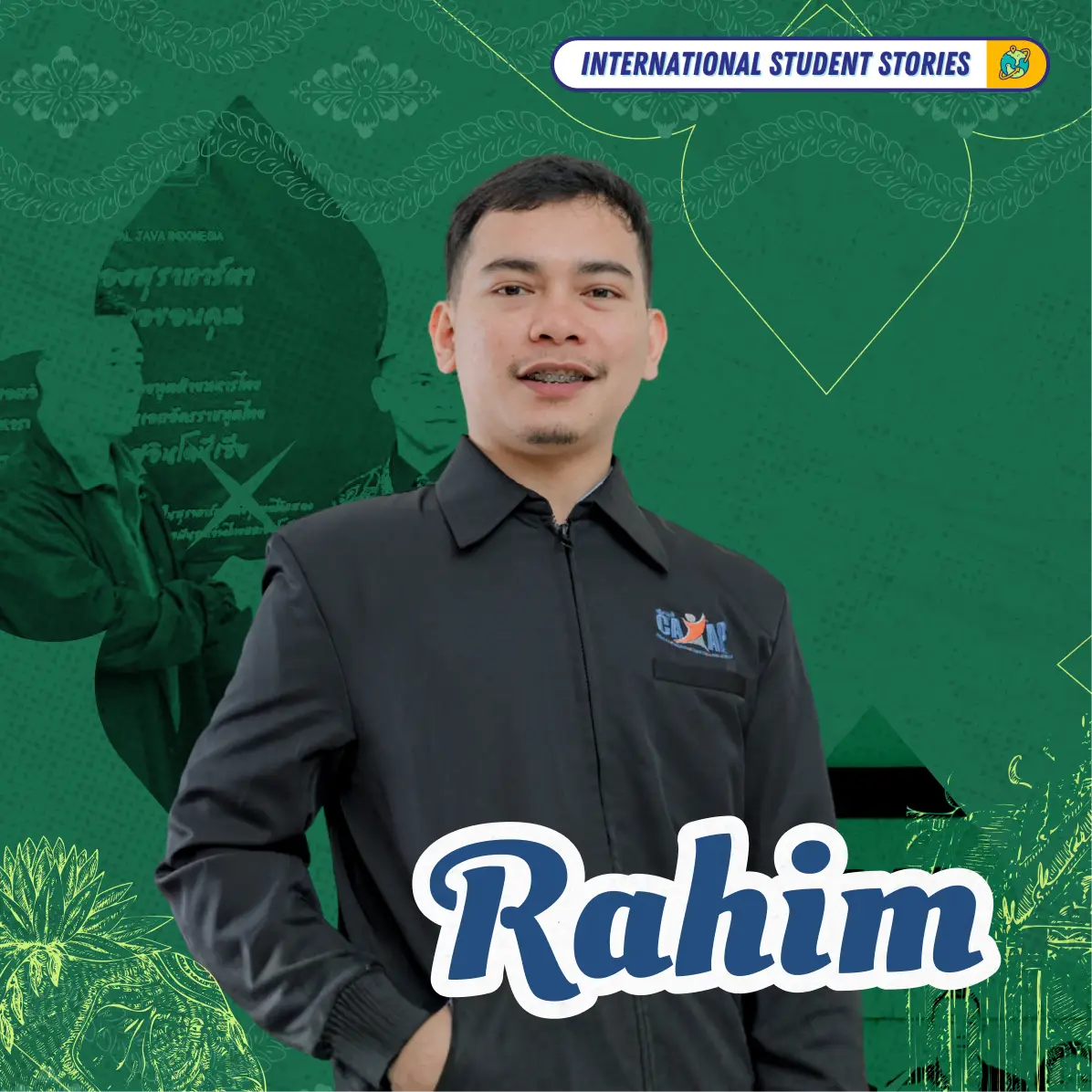
Three Years Won't Fit in a Folder
2 Februari 2026
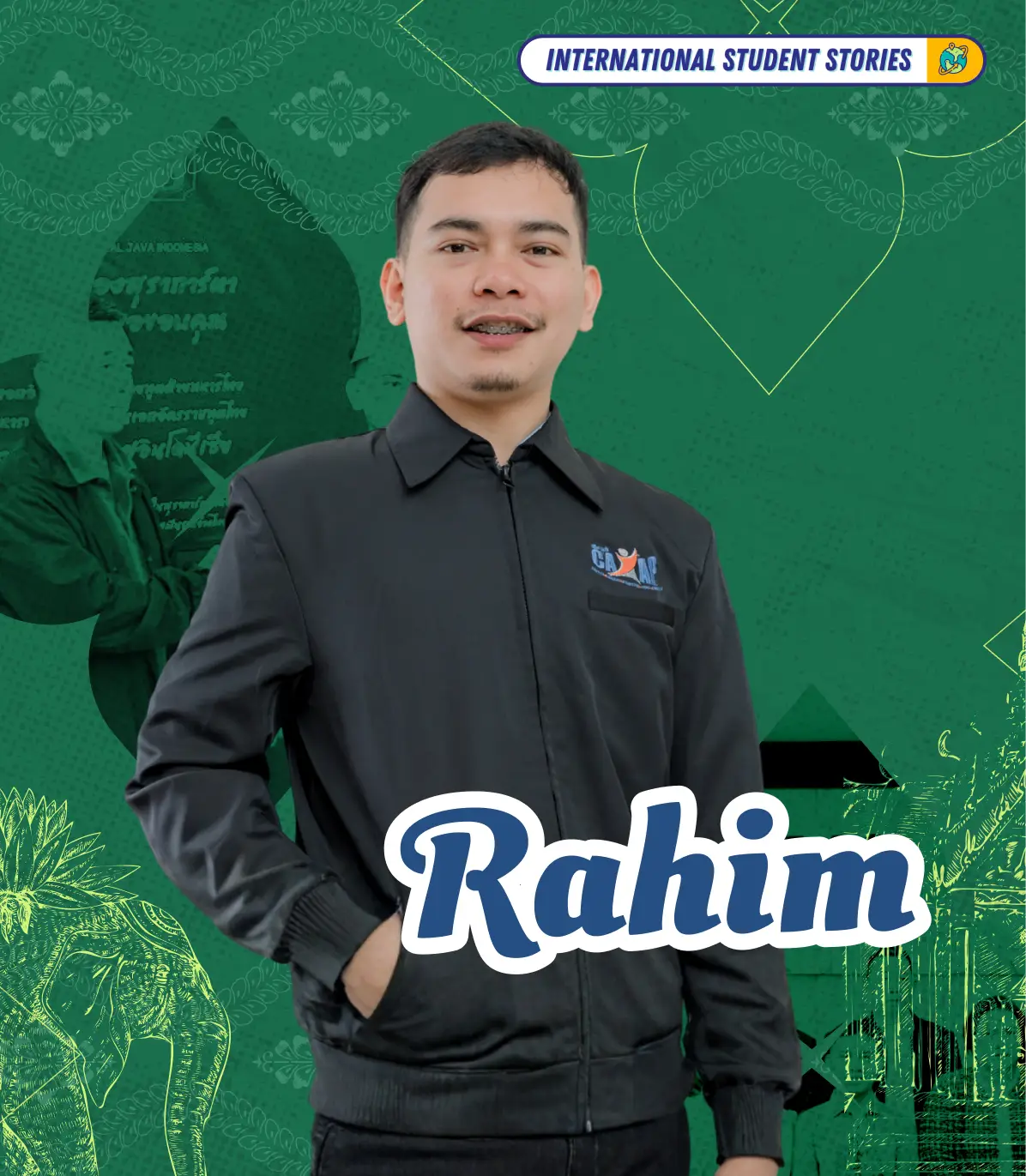
For three years, Rahim led the Thai Students Organization of Surakarta. Now he's close to graduating, leaving the office he called home.


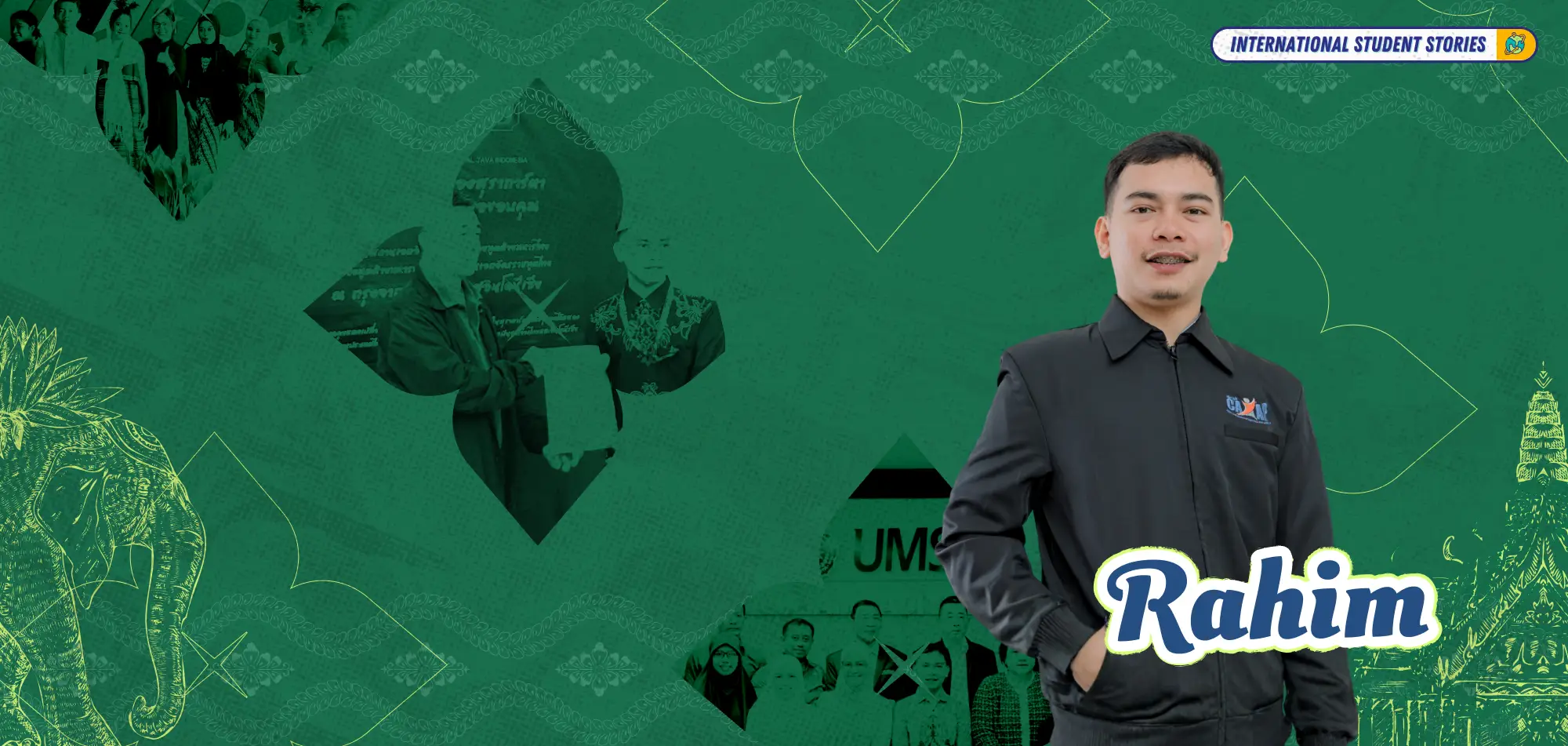
The Thai Students Organization of Surakarta runs from a house in a quiet housing complex. A banner by the door marks it as the office, otherwise, it looks like any other house on the street.
Rahim met me at the door. Inside, the space opened into something between an office and a living room. Snacks in plastic jars were already set out on the table.
Schedules taped to the wall in neat columns. Banners from past events, folded and stacked in one corner. A row of student ID photos, some faded, some newer, and group shots from gatherings. Some of those faces had already graduated and gone home. Others were still here scattered across campuses in Surakarta. For the past three years, this had been Rahim’s home.
Through a doorway, I caught a glimpse of his room, a bed, a desk, clothes on a chair. It looked like any other student's place.
“Eat first,” he said as he sat down cross-legged across from me.
Rahim had been president for as long as he'd lived in Solo. This was his last year.
When I asked how that felt, he was quiet for a moment. His eyes drifted to the photos on the wall.
“It's strange, I've been doing this so long, I don't really know what it will be like to stop.”
Abdulrahim E-sor comes from Sungai Kolok, a border town in southern Thailand so close to Malaysia that his father's siblings still live on the other side.
His Arabic name, Abdulrohim, Al-Rahim, was given by his grandfather. It means "Servant of the Most Merciful." Rahim believes a name is a prayer. He carries it as a responsibility: to show compassion, to care, to help.
After graduating with a bachelor’s degree in Islamic Law, he went straight to work at the Halal Committee, checking factory certifications and verifying ingredients. In a country where Muslims are a minority, the work is exacting and necessary.
Rahim, then a 23-year-old, had been thinking about continuing his education for a while. A year into the job, the routine had settled: go to work at 8, home by 4.
He leaned back. “I simply wanted more.”
He found the opportunity through his workplace. An agreement with Indonesian universities meant scholarship postings circulated through the office. He applied to several. Most required him to continue in Islamic Law. Universitas Muhammadiyah Surakarta said he could change fields.
Read more: Passion and Resolve in Every Word
Indonesia made sense to him for other reasons too. Growing up near the Malaysian border, he'd been exposed to Malay language and culture, and back in Thailand, especially in tourist cities, Indonesian visitors were common.
"I was already curious about Indonesian," said the 25-year-old student.
But curiosity and fluency are different things. Before starting his master's program, he spent a year in BIPA, the Indonesian language course for foreign speakers. The instructors were patient, treating mistakes as part of the process.
Even with Malay in his background, he had rarely used it. His friends back home spoke Thai. His schooling was in Thai. Indonesian was close, but not close enough to skip the work.
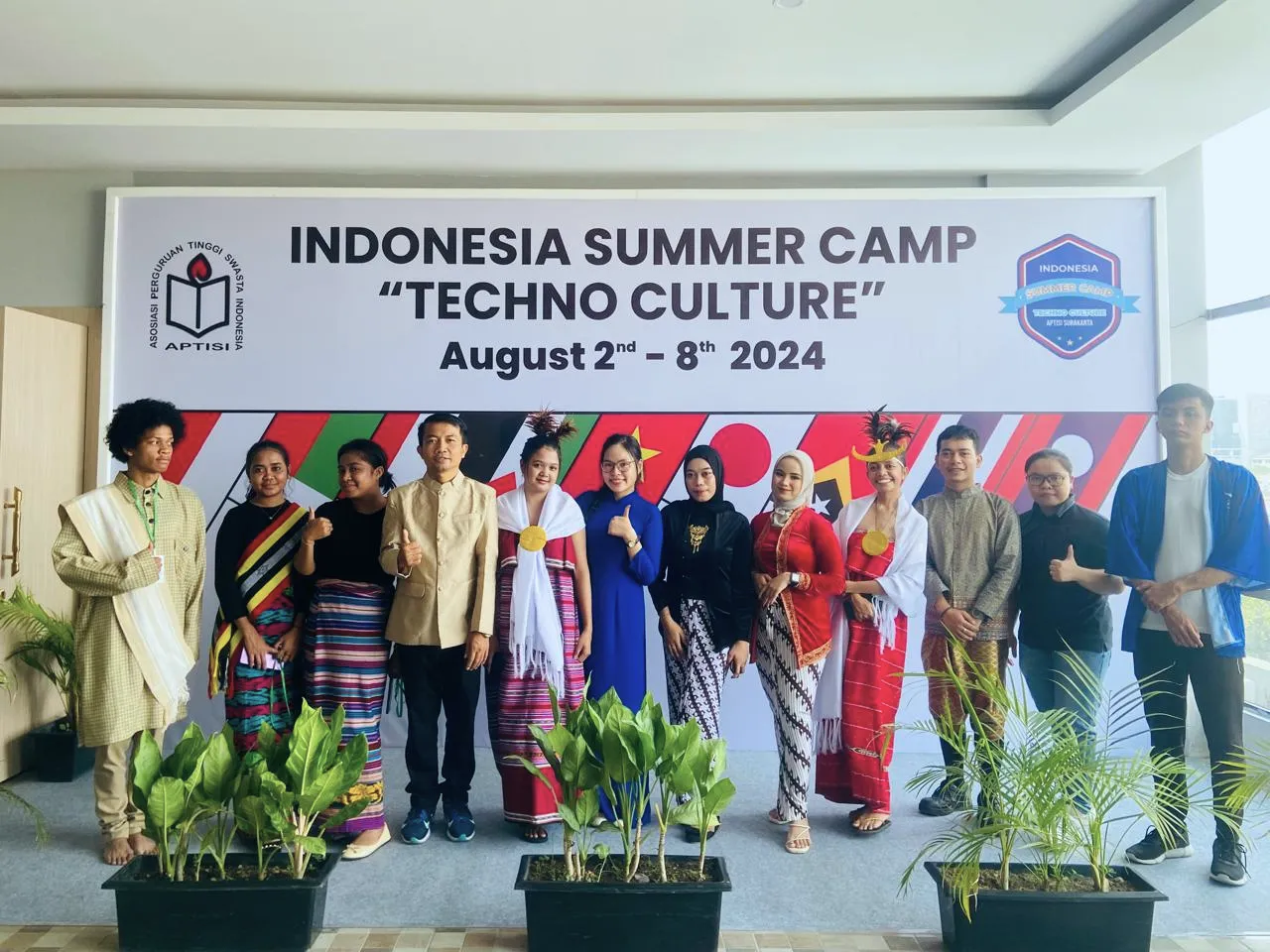
When he entered the master's program in Indonesian Language Education, the gap became real. He was the only foreigner in his class. His Indonesian classmates had years of academic language behind them.
“They were maybe at level ten,” he said. “I was at two or three. But they helped me catch up.”
Every semester, they helped with assignments, walked him through articles, and explained what he couldn't grasp on his own.
The lecturers adjusted too. Some allowed him to present in English when Indonesian wasn't yet possible. His thesis is about Thai students learning Indonesian in Surakarta, why they come, and what makes it hard.
The Thai Students Organization of Surakarta (TSOS) has documented student life since 2012. But when the pandemic hit, many Thai students went home. The organization went quiet.
A senior, then finishing his doctorate, kept it running until he graduated. When Rahim arrived at UMS in 2023, the senior needed someone to take over. Rahim was nearby and willing.
"I was offered to lead and continue the organization," he said.
Since then, he's rebuilt it. New social media accounts, because the old ones had changed hands too many times. A clearer structure. Collaborations with external organizations. Coordination with the Association of Thai Students in Indonesia, which funds the office through the Thai Embassy in Jakarta.
Every year since, there's been an election. He won three consecutive terms.
“Honestly, there were moments when I wished someone else would step up,” he said. “But every election the majority chose me again. Maybe because I was still here. Maybe because people got used to how I work.”
Three years is a long time. He gave things up. Personal time. The chance to just be a student. The relief of not always being the one who decides.
“But there were also lessons. About responsibility. About trust. About bringing different people together,” said Rahim.
In September 2024, he started the organization's first Instagram. Before that, everything was on Facebook. He organized five annual programs: welcome gatherings, sports events, Ramadan cooking, Eid for those who don't return home, and a year-end closing.
Twenty-eight members are now spread across three campuses: UMS, Universitas Sebelas Maret, and UIN Raden Mas Said.
"Even if we're from different campuses, we know each other," he said. "We know where in Thailand we're from."
In Surakarta, Rahim is the organization's point of contact. When the Thai embassy needs data on students in the city, he compiles it. When officials visit from Thailand, he receives them.
Those responsibilities come from TSOS's place in a larger network of Association of Thai Students in Indonesia (ATSI), which coordinates with the embassy and other city chapters in Yogyakarta, Malang, and Jakarta.
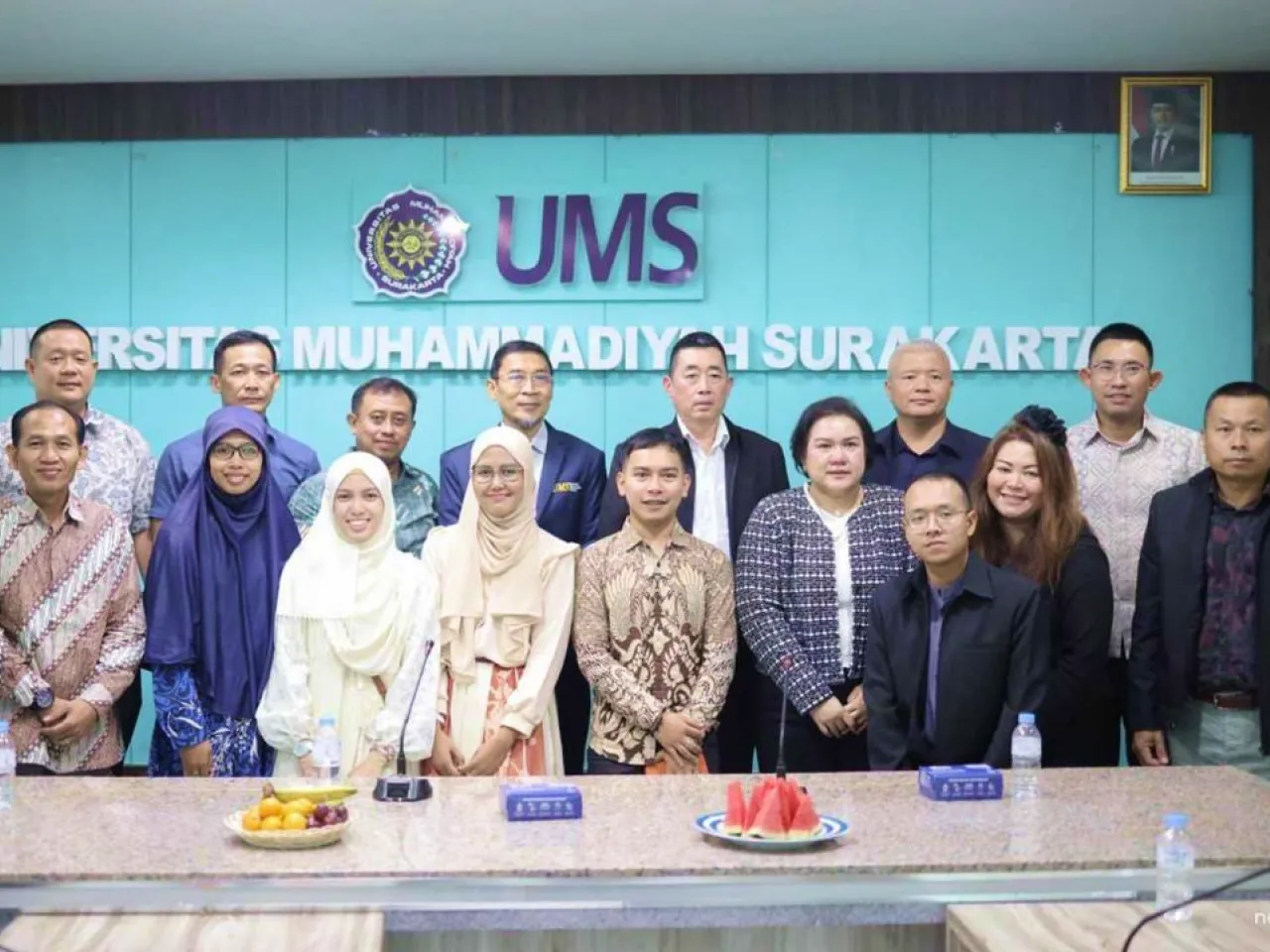
Living in the office means the door is always open. Guests arrive at least once a month. Sometimes more. The room fills during events, people, noise, the smell of food cooking, then empties when everyone leaves. Most of the time, it's just him again.
Asked if it ever got tiring. He shrugged. "Sometimes."
In a few months, Rahim will graduate and return to Thailand. He's considering a doctoral program in Education Management, or maybe teaching Indonesian language.
"It's an elective in Thai high schools now," he said.
Besides finishing his thesis, the outgoing president is training someone to take over, preparing documents, organizing files. Everything he's built won't fit in a folder, but he is trying.
Three years of managing the place, living in it, that sense of belonging doesn't just disappear. He knows it will linger. But he also knows what his role is now.
“My job isn't to hold on,” Rahim said. “It's to let go.”
He built something he now has to leave. Whether that felt like freedom or loss, he didn't say.
But for now, he's still here. The schedules. The ID cards. The banners. The photos. All of it will still be here after he's gone.
"In all my time here, I never really felt alone."
Writer: Farizal Luqman Majid
Editor: Al Habiib Josy Asheva
For three years, Rahim led the Thai Students Organization of Surakarta. Now he's close to graduating, leaving the office he called home.
Tak ada yang lebih spesial dari membaca berita pilihan redaksi hanya untukmu.
Langganan gratis UMS Newsletter sekarang.